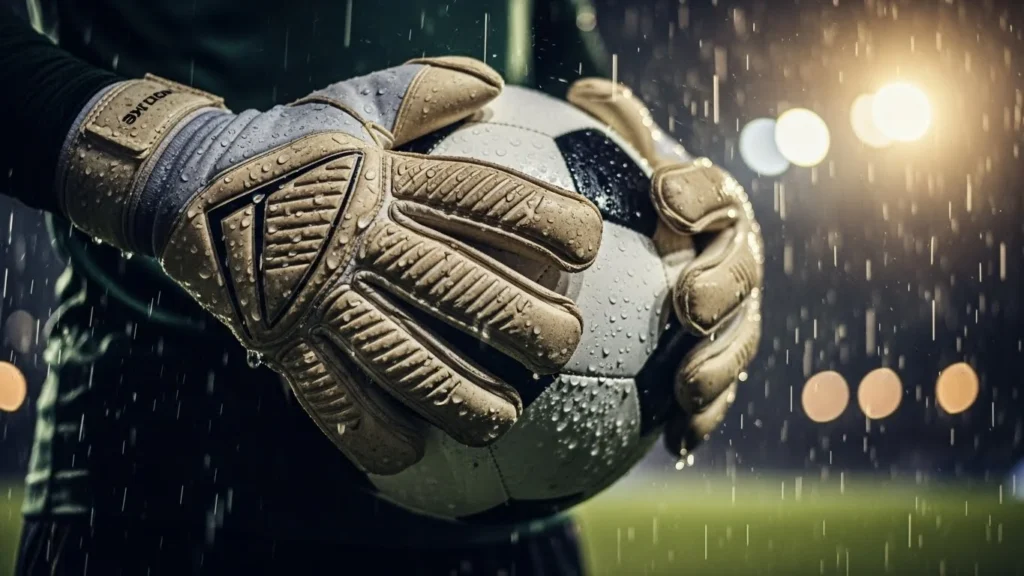
If you have ever wondered why wet weather goalkeeper gloves feel unbeatable in warmups, then suddenly turn slippery the moment the rain gets serious, you are not imagining it. A goalkeeper glove is basically a high-friction latex surface that depends on clean contact with the ball.
In wet weather, water changes that contact in a few very specific ways, and those changes can overpower even a “best grip” palm.
The real job of a goalkeeper glove palm
Latex on a goalie glove grips the ball through a mix of:
- Adhesion: the latex “sticks” at a microscopic level when it can touch the ball directly.
- Deformation: soft latex molds into the ball’s texture, increasing contact area.
- Friction: more real contact area usually means more grip and control.
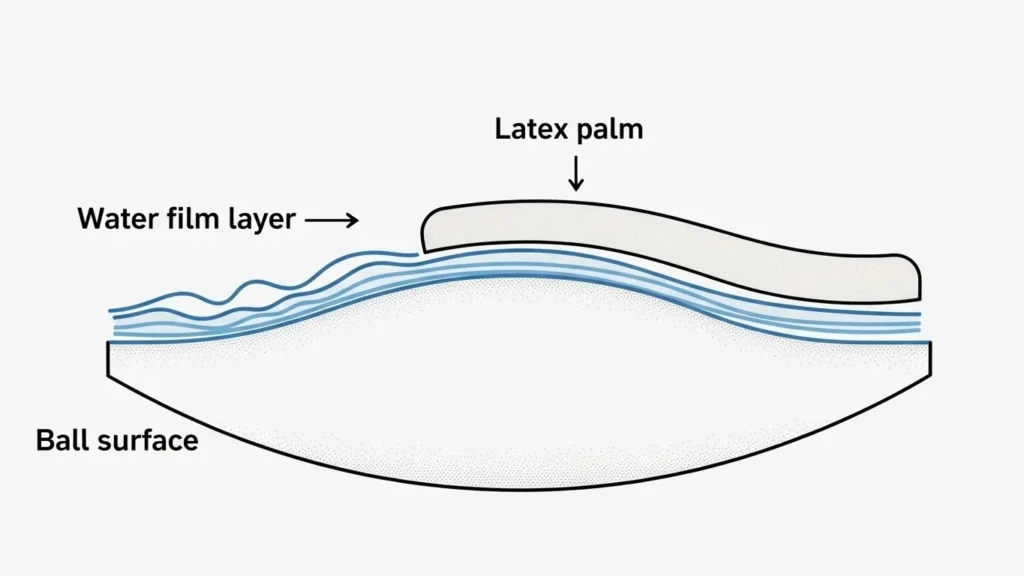
In dry conditions, a quality goalkeeper glove can create a large, clean contact patch. In wet conditions, the physics of water tries to keep the latex and ball from actually touching.
Water creates a “slip layer” that reduces contact
Rain does not just make things wet. It creates a thin film that can sit between:
- the latex and the ball
- the latex and dirt on the ball
- the latex and your own glove sweat and soap residue
That film acts like lubrication. Even if the glove feels tacky, the ball can hydroplane on a microscopic level. The result is less real contact area, less friction, and less control and grip.
Why some rain feels “grippy” and heavy rain feels “slick”
Light rain can sometimes help because moisture can increase tack on certain latex formulas. But in heavier rain, the film gets thicker and more continuous. Once that happens, the glove shifts from “sticky contact” to “sliding on water”.
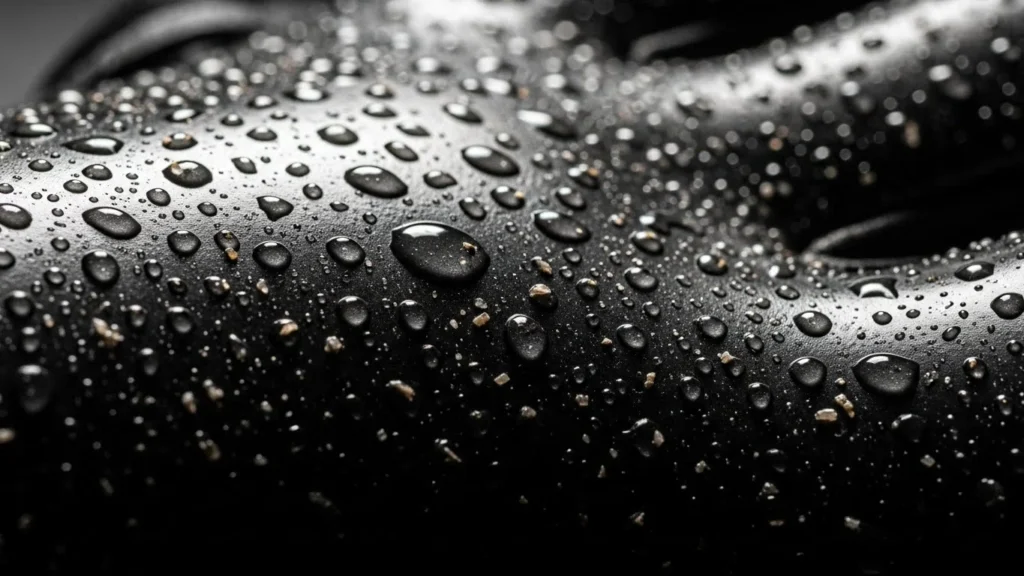
This is why a glove that felt like the best goalkeeper glove in drizzle can feel like a bar of soap in a downpour.
Aqua latex, contact aqua, and “wet-weather gloves”
Many wet-weather gloves use softer latex marketed as aqua or contact aqua. The goal is simple: stay soft enough to deform and maintain as much contact as possible in wet conditions.
What are the best goalkeeper gloves for wet weather?
The best goalkeeper gloves for wet weather utilize specialized “Aqua Latex” or “RE:GRIP” technology designed to absorb surface water and maintain friction. For professional-grade performance in heavy rain, the Reusch Attrakt RE:GRIP is the top choice, while the Uhlsport Prediction Absolutgrip offers the best balance of wet-weather tack and durability.
| Recommended Glove | Best For | Grip Type | Amazon Link |
|---|---|---|---|
| Reusch Attrakt RE:GRIP | Heavy Rain & Pro Matches | RE:GRIP / Aqua Latex | Check Price on Amazon |
| Uhlsport Prediction | Durability + Wet Grip | Absolutgrip Foam | Check Price on Amazon |
| Elite Sport Supreme | Hybrid/All-Weather | Contact Latex | Check Price on Amazon |
Trade-off: softer latex often wears faster, especially on artificial turf. If you train often on turf, you may want one pair of gloves for training sessions and another pair of goalkeeper gloves for match use.
Glove cut and fit matter more in wet conditions
When grip drops, the glove needs better “ball feel” and stability.
- A negative cut can give a more snug fit, reducing finger movement inside the glove.
- A correct glove size prevents the palm from wrinkling and losing contact under pressure.
- A stable backhand and wrist closure help keep your hand behind the ball, improving control and grip.
If you are between sizes, the “right pair” is usually the one that stays tight without cutting circulation. A sloppy fit can make wet grip feel even worse.
Finger protection: helpful, but it can change catching mechanics
Gloves with finger protection can help prevent hyperextension, especially for youth goalie gloves and goalkeepers returning from injury. But finger spines can reduce how naturally your hand wraps the ball. In the rain, that can matter because you need every bit of surface contact you can get.
If you choose finger protection, prioritize palm latex and fit first. Then confirm you can still shape your hands comfortably for catching and parrying.
Dirt + rain = grip loss accelerates
In bad weather, the ball picks up grit. Grit plus water creates a grinding paste that:
- fills the latex pores
- reduces tack
- increases slip
- accelerates wear on new gloves
That is why a glove might feel strong early, then fade quickly as the match goes on.
Wet Weather Goalkeeper Gloves 2026: what to look for when you choose the right pair
If you are shopping for wet weather goalkeeper gloves in 2025, focus on features that improve real contact:
- Soft wet-condition latex (often labeled aqua or similar) like that found in the Reusch Attrakt RE:GRIP.
- Palm thickness that balances grip and cushioning with ball feel.
- Cuts that keep the palm flat on the ball (negative cut or close-fitting hybrids) as seen on the Uhlsport Prediction.
- Strong wrist closure for stability.
- Separate “match gloves” and “training sessions” gloves if you play often.
Ignore hype first. Choose the right gloves based on your weather conditions, surfaces, and how quickly you go through a pair of gloves.
How to get even more grip in the rain (simple habits that work)
These steps help you enhance the grip without gimmicks:
- Pre-dampen the palms: slightly wet latex can grip better than fully dry latex in wet conditions.
- Keep them clean: rinse out grit at halftime if possible.
- Use a towel: wipe the ball and palms when you can.
- Store them right: use a glove bag or a breathable glove bag so older gloves do not rot or harden.
- Wash your gloves correctly: plain water or glove wash, then air dry away from heat.
A clean palm and controlled moisture often create the best possible grip you can get in challenging weather.
When it is not the glove: technique adjustments for wet weather goalkeeper play
Even the best soccer goalie gloves cannot beat physics every time. In heavy rain:
- Catch “through” the ball with your body behind it
- Use safer parries when the shot has pace and the surface is slick
- Avoid one-hand catches unless necessary
- Expect rebounds and be set for a second action
Wet conditions punish lazy hand shape. Strong, early positioning makes your gloves feel better.
Quick checklist: determine your glove size and match it to your needs
- Measure hand length and palm width, then compare to brand sizing
- Prioritize a snug fit with no palm bunching
- Choose finger protection only after you confirm fit and feel
- Pick one glove for wet or dry matches, and a durable pair for training, especially on artificial turf
Conclusion
Rain reduces grip because water forms a thin lubricating layer that lowers real contact between latex and the ball, especially once dirt mixes in. The solution is a smart balance of latex type (often aqua), correct glove size, and match-day habits like keeping palms clean and properly damp.
If you want wet weather goalkeeper gloves that perform in real storms, choose the right pair for your surfaces, keep them clean, and train your wet-weather technique so the glove can do its job.
FAQ
Do wet weather goalkeeper gloves work better if they are slightly wet?
Yes. Many latex palms grip better when lightly damp, because the latex stays soft and can conform to the ball. Fully dry latex in rain can feel inconsistent.
Why do new gloves sometimes feel worse in the rain than expected?
New gloves can still have factory residues, and they pick up grit quickly in wet matches. A proper rinse and correct moisture level can improve glove grip. For serious grip, consider a match-ready pair like the Reusch Attrakt RE:GRIP.
Are gloves with finger protection worse for grip?
Finger protection does not directly reduce latex grip, but it can change hand wrapping and catching feel. In wet conditions, that can make control harder unless the fit and technique are solid.
How often should you wash your gloves?
Wash after matches and gritty training sessions, especially in wet conditions. Clean latex keeps more tack and lasts longer.
Are goalkeeper gloves for wet better or worse on artificial turf?
Wet-condition latex can grip well but often wears faster on turf. Many keepers use a durable training pair for turf and a softer match pair for games.