Every goalkeeper knows the feeling. You step into a rainy match confident in your handling, then a routine catch turns into a spill because the ball slides through your hands. Wet weather exposes glove weaknesses fast, and it is not just the rain. It is the way water, dirt, and latex interact under pressure during catching, parrying, and punching.
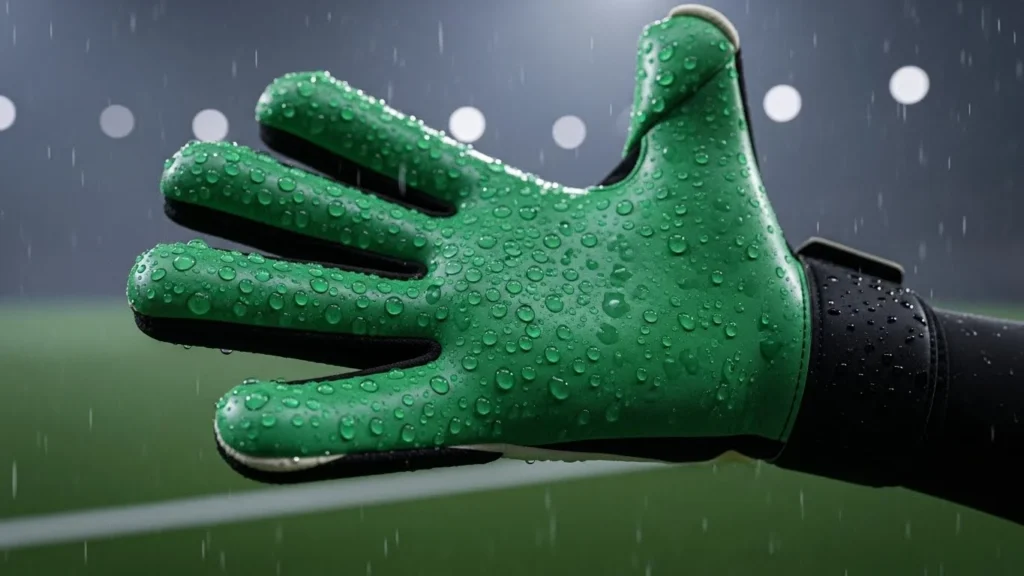
Goalkeeper gloves lose grip in rain because water forms a slick barrier between the latex palm and the ball while dirt turns into a thin muddy film that clogs the latex pores. When the palm is too saturated or contaminated, the latex cannot create friction or “bite” into the ball’s surface, so control drops sharply.
The Science Behind Grip Loss in Wet Conditions
To understand why grip disappears, you need to understand how latex palms work. Goalkeeper glove latex is a porous, soft material designed to deform when it meets the ball. That deformation increases contact area and friction. In dry conditions, the tacky surface and the microscopic pore structure help the glove “grab” the ball consistently.
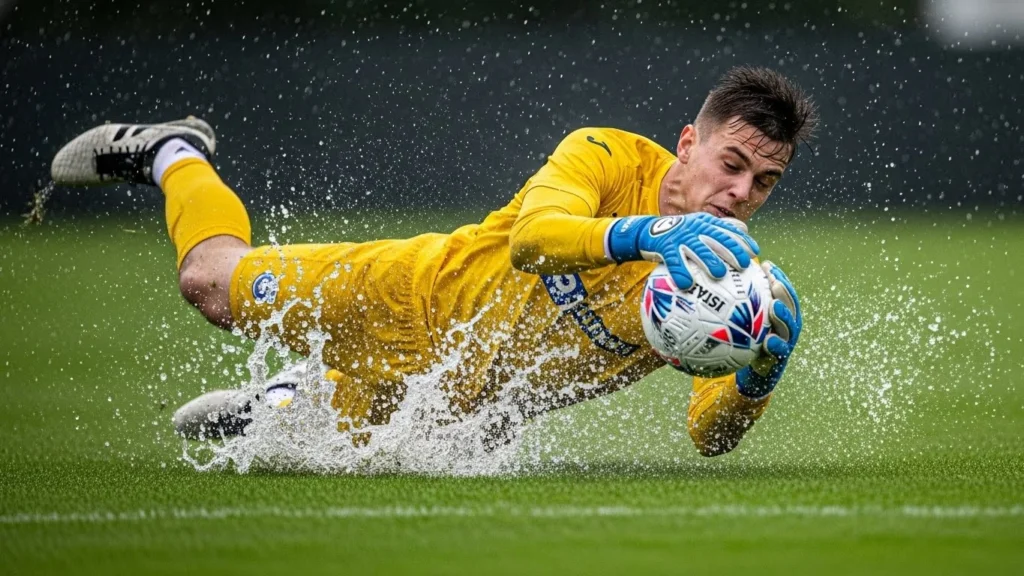
In the rain, two main failures happen at the same time:
- Aquaplaning (water film): A thin layer of water can sit between the latex and the ball, similar to a tire riding on water. If the latex cannot absorb or push that water away fast enough, the ball effectively “surfs” over the palm instead of contacting it.
- Silt and pore clogging: Rain splashes dust, rubber crumb, and field debris onto your hands. On a wet palm, those particles stick instantly and form a slick grime layer. That layer fills the pores that normally help with grip, neutralizing the latex’s natural tackiness.
Saturation is the third factor that makes everything worse as the match goes on. Latex is porous by design, so it absorbs water. If your gloves become overly saturated, the palm can feel heavy and slick rather than tacky. This is why some gloves feel “okay” early in the match, then become unreliable after repeated contact with wet grass, mud, and the ball.
Latex type matters too. Many durable “all-round” palms are denser and built to resist abrasion. They often do not manage heavy moisture as well as softer wet-weather palms with a more open structure. Wet-weather latex is usually designed to keep tack when damp and to handle water volume without letting it sit on top of the palm for long.
Finally, glove care can either preserve grip or destroy it. Residue from old dirt, sweat, or harsh soap builds up in the palm, and in rain that residue turns into a slippery paste. Drying habits matter as well. Direct sunlight, radiators, and heat vents can harden latex and reduce tack over time, even if the damage is not obvious right away.
How to Choose the Right Goalkeeper Gloves for Wet Weather
If you regularly play in rainy conditions, the easiest upgrade is to keep a dedicated wet-weather pair. Look for these criteria when buying gloves that perform in rain:
- Wet-weather or aqua-style latex: Softer, premium palms are typically better in rain because they stay tackier when damp and maintain better contact under moisture.
- Tighter cuts for better feel: A negative cut or hybrid cut can reduce internal hand movement, giving you more control when the ball is slick.
- Good drainage and comfort: Breathable mesh bodies and smart paneling help reduce waterlogging so the glove stays lighter over ninety minutes.
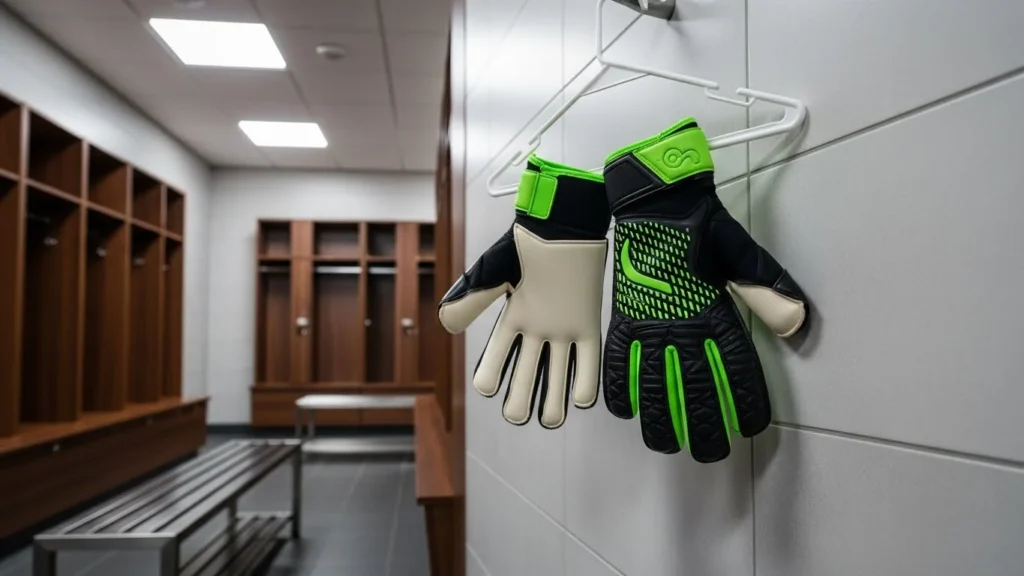
If you want to browse options built for rain, start here: aqua latex goalkeeper gloves.
Wet Match Grip Fixes You Can Use Today
You do not need a brand-new glove to improve wet handling. These practical fixes help most keepers immediately:
- Lightly dampen the palms before kickoff: Slight moisture can “activate” tack on many latex palms. The goal is damp, not dripping.
- Keep palms cleaner than you think you need to: Dirt is the real grip killer in rain. Clean palms keep pores open and friction higher.
- Manage contact during stoppages: If you have breaks in play, wipe off grime and excess water so you return to a tackier surface.
Many keepers keep a small towel in the net area for quick moisture control. If you want one dedicated to your kit: goalkeeper glove towel.
Essential Maintenance: Keeping Latex Grip Prime
Grip in rain is as much about maintenance as it is about materials. After every wet session:
- Rinse with lukewarm water: This removes silt and debris that fill latex pores and cause slip.
- Avoid harsh detergents: They strip latex and can leave residue that becomes slick when wet.
- Air dry in shade with ventilation: Never use radiators, hair dryers, or direct sun, because heat hardens latex and reduces tack.
If you want a cleaning option designed for latex palms, use a dedicated wash: goalkeeper glove wash.
For storage, keep palms protected and avoid letting wet gloves sit crumpled in a bag. A simple glove bag helps reduce contamination between sessions: goalkeeper glove storage bag.
Conclusion
Goalkeeper gloves lose grip in rain for clear, physical reasons: water creates a barrier, dirt clogs latex pores, and saturation turns tacky foam into a slick surface. The fix is equally clear.
Choose wet-weather latex when rain is common, keep palms clean, manage moisture during the match, and dry gloves the right way. Do those things consistently, and rainy matchdays stop feeling like a gamble and start feeling like a controllable challenge.