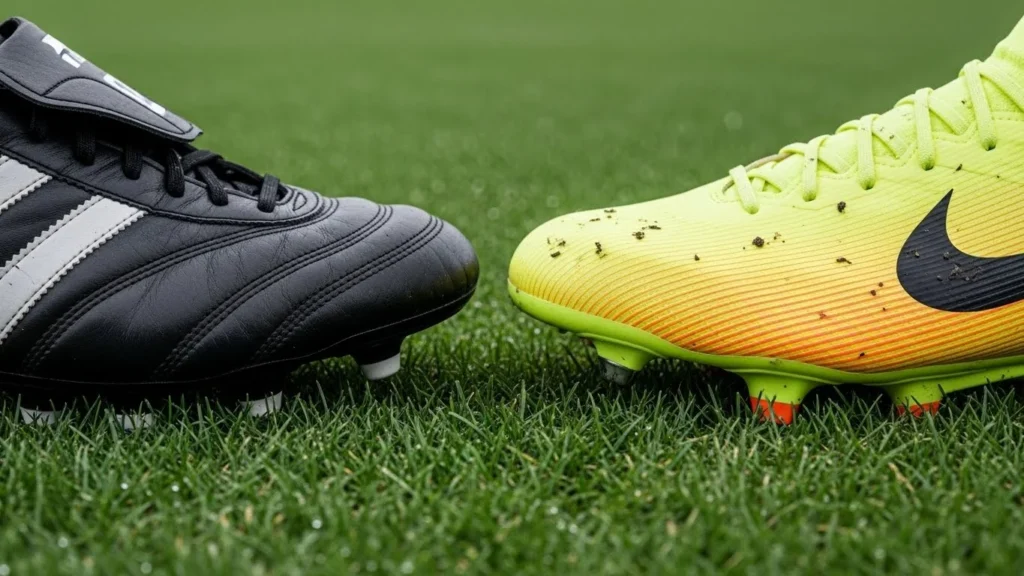
If you have ever bought a new pair of soccer cleats that felt perfect in the shop but turned into a blister-inducing nightmare after thirty minutes of play, you have experienced a failure in fit-prediction.
Choosing between natural and man-made uppers is one of the most debated topics in the locker room because many players don’t understand how their boots will transform after five, ten, or fifty hours of use. This uncertainty leads to players buying boots that are too large in anticipation of “break-in” or too small, hoping for a stretch that never comes.
When analyzing kangaroo leather vs synthetic soccer cleats stretch, the primary difference lies in the material’s molecular structure.
Kangaroo leather features a unique multidirectional collagen fiber network that relax and mold to the foot’s specific pressure points under heat and moisture, while synthetic uppers are composed of rigid polymer chains designed to resist deformation and maintain their factory shape indefinitely.
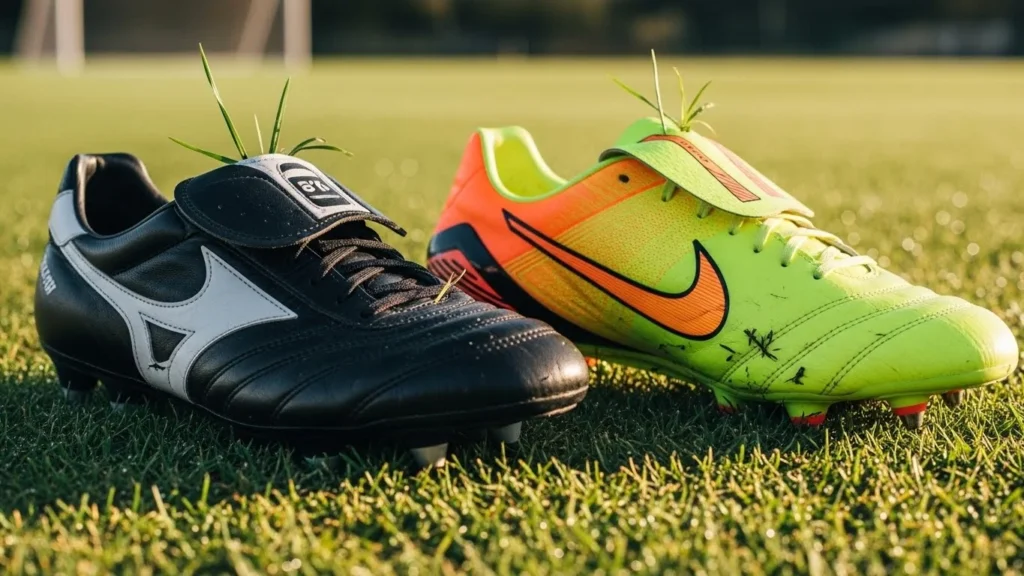
For players seeking an adaptive fit, kangaroo leather is a common choice for comfort as it can expand up to half a size in width during the break-in period.
The Molecular Mechanics: Why Materials Stretch Differently
The core of the kangaroo leather vs synthetic soccer cleats stretch debate is found in the microscopic anatomy of the upper. Kangaroo leather (K-leather) is widely considered the premier natural material in sports because its collagen fibers are arranged in a complex, interlocking web rather than the layered horizontal structure found in cowhide.
When you play, the heat generated by your foot and the moisture from sweat act as catalysts. These elements allow the collagen fibers to “slide” and realign themselves around the widest parts of your foot, such as the bunion area or the fifth metatarsal. This is a mechanical adaptation that creates a custom-molded fit unique to the wearer.
In contrast, synthetic uppers are engineered for “Zero-Distortion.” Whether they are made from Teijin microfibers, knitted polyesters, or polyurethane-coated meshes, these materials are built using long-chain polymers.
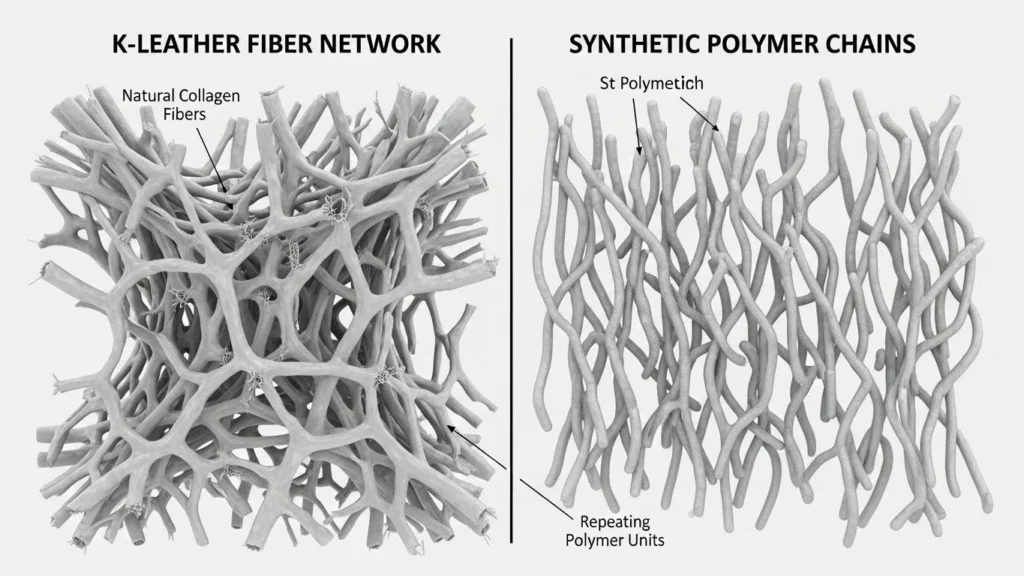
These chains are chemically bonded to stay exactly where the manufacturer placed them. While this ensures the boot feels “responsive” and “snug” immediately, it means there is no mechanical relaxation.
If a synthetic boot is tight on day one, the only “stretch” you will feel is the material’s elastic limit, which usually snaps back to its original shape the moment you take the boot off. This is why players often feel “cramped” in speed boots after long training sessions as their feet naturally swell.
The “Break-in” period is also physically different for each. Leather undergoes “Plastic Deformation,” meaning the change in shape is permanent and cumulative. Synthetics undergo “Elastic Deformation,” where they may flex during a sprint but provide a constant, unchanging squeeze.
For a player, this means leather provides a dampened, personalized touch, while synthetics provide a high-tension, consistent lockdown that never wavers, regardless of how many matches you play.
Buying Criteria: Matching Material to Foot Shape
Understanding the kangaroo leather vs synthetic soccer cleats stretch helps you determine which material suits your anatomical needs. If you have a wide forefoot or suffer from pressure-sensitive spots, the adaptive nature of K-leather is essential.
It prevents the “vice-grip” sensation that can lead to numbness or “hot spots” during a match. However, if you have a narrow foot and value a “one-to-one” feel where the boot acts as a rigid extension of your foot, the non-stretch nature of synthetics is a massive advantage.
When selecting your next pair, use these criteria to guide your decision:
- Initial Fit Tension: K-leather boots should feel “comfortably tight” at first, as they will expand. Synthetics must feel “perfectly comfortable” out of the box, as they will never get larger.
- Weight vs. Adaptability: Synthetics are often lighter because they don’t absorb as much water, but K-leather offers superior energy absorption and ball dampening.
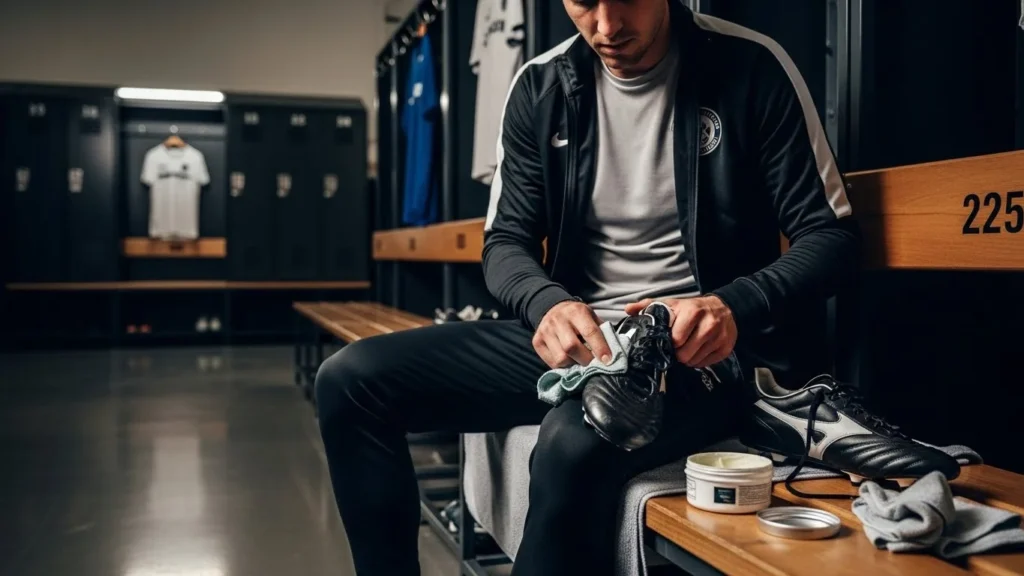
- Maintenance Requirements: Leather requires “food” (balms) to keep the collagen fibers supple. Synthetics only require a quick wipe-down.
Expert Recommendations
If you are ready to choose your next pair based on your preference for stretch and feel, consider these top-tier options:
- Top-Rated Kangaroo Leather Cleats: Best for players who prioritize an adaptive, custom-molded fit.
- Modern Synthetic Speed Cleats: Ideal for players seeking a consistent, high-lockdown feel that never changes.
- Leather Care & Conditioners: Essential for maintaining the stretch and lifespan of K-leather uppers.
Conclusion
The winner of the kangaroo leather vs synthetic soccer cleats stretch debate depends entirely on your foot’s need for adaptation. Leather is a “living” material that grows with you, providing a bespoke fit that improves with every training session.
Synthetics are high-performance tools that offer the same tension on day 100 as they did on day 1. By matching the material’s mechanical properties to your foot shape, you can ensure your boots remain a tool for performance rather than a source of pain.