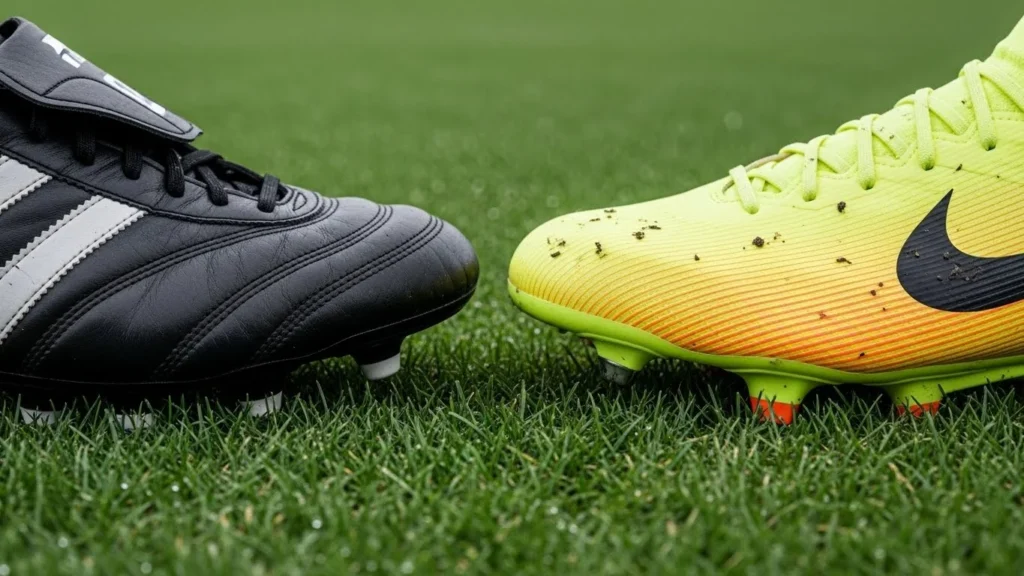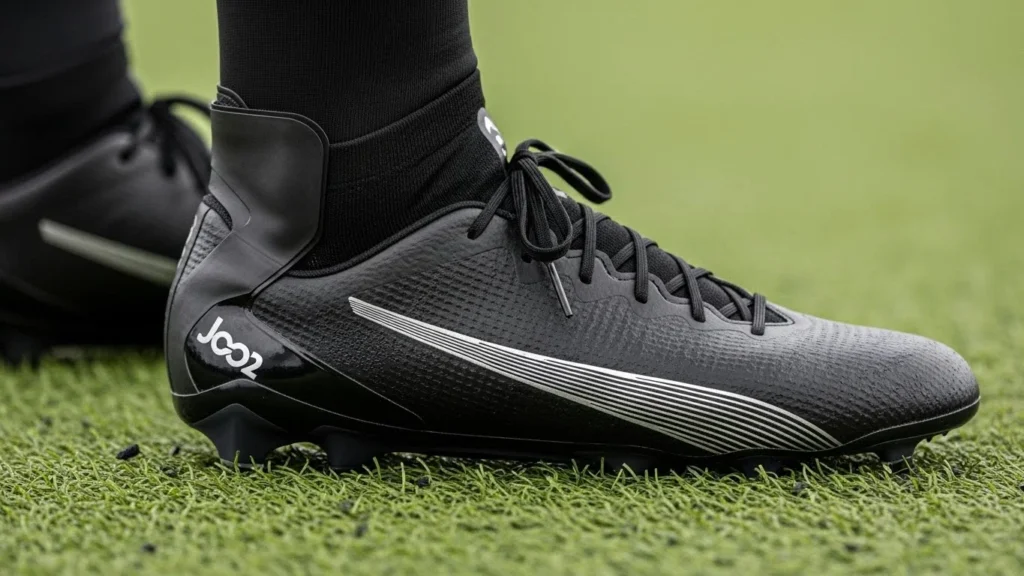
If you have ever spent ten minutes in a locker room struggling to jam your foot into a pair of tight speed boots while wearing a standard medical brace, you have experienced the “volume conflict.” Most braces feel like a thick layer of armor that has no business being inside a piece of performance footwear.
You end up with a heel that slips out of the shoe, toes that feel crushed, and a midfoot that goes numb before the halftime whistle even blows. This frustration isn’t just about the size of your cleats; it is about a fundamental mismatch between traditional orthopedic design and the “second-skin” engineering of modern soccer footwear.
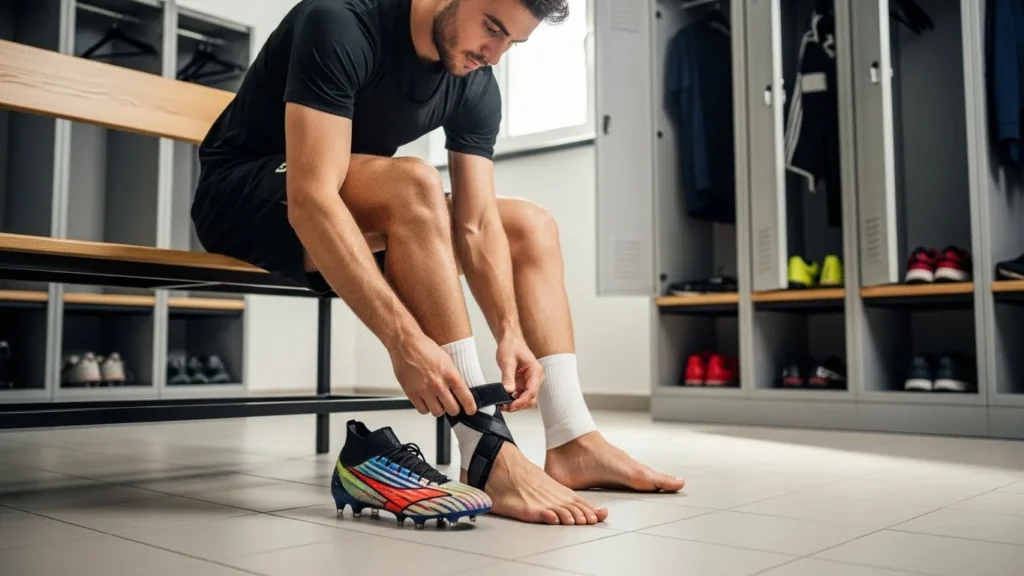
The most effective ankle brace for soccer cleats is a ultra-low-profile design that replaces rigid plastic stays with high-tensile figure-8 straps. To maintain a professional fit, you must choose a brace that minimizes material in the “heel pocket” and “lace channel” zones.
Because soccer cleats are designed with a narrow last to improve ball feel, a cleat-specific brace like the McDavid Phantom is a common choice for comfort as it mimics the support of professional athletic tape without the bulk of a standard stirrup brace.
The Mechanical Failure: Why Standard Braces Conflict with Cleat Anatomy
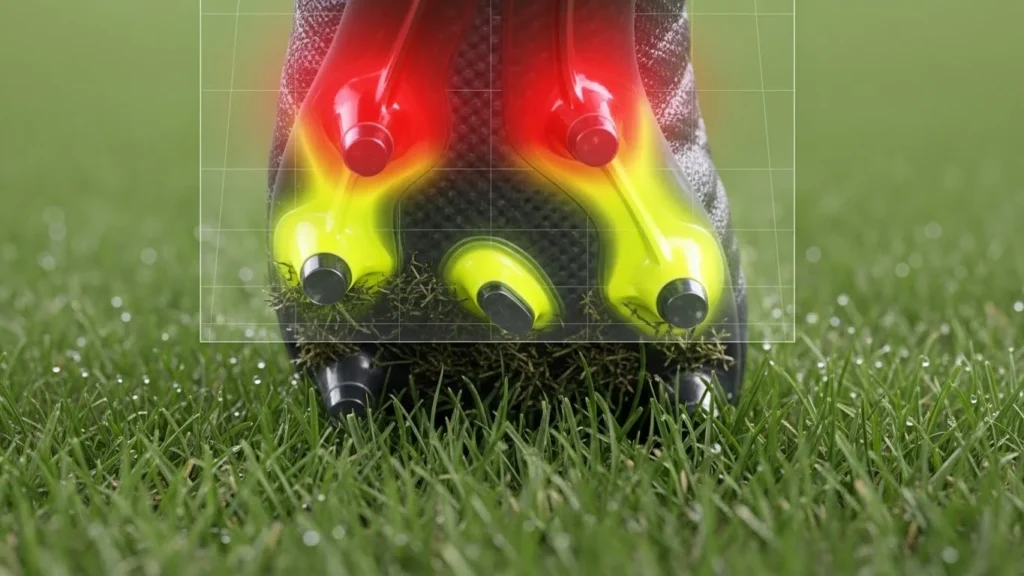
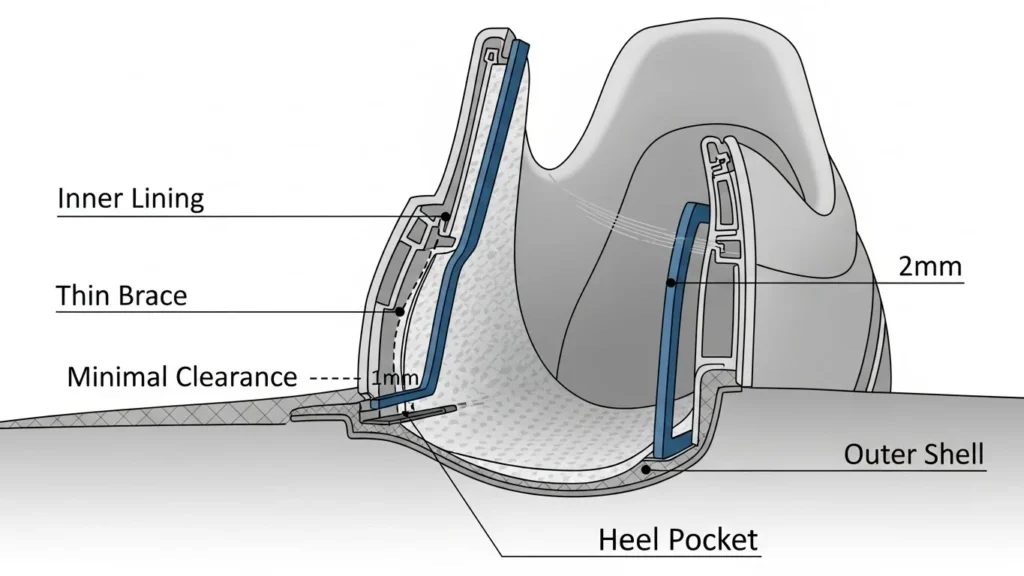
To understand why an ankle brace for soccer cleats is so difficult to find, we have to look at the physics of “Heel Seating.” Soccer cleats are built with a deep heel counter designed to “cup” the calcaneus (heel bone). This cup ensures that when you make a hard cut, your foot stays locked to the soleplate.
However, a standard ankle brace typically adds 2mm to 4mm of padding directly under the heel. In the world of high-performance cleats, 2mm is the difference between a perfect lockdown and your heel sitting too high. When the heel sits high, the cleat collar can no longer “grab” your ankle, leading to severe heel slippage and a loss of stability.
Furthermore, we must address “Lace Channel Volume.” Modern cleats, especially lightweight speed models, have a very low-volume midfoot. When you stack a brace’s tongue, the cleat’s tongue, and thick nylon lace panels, you create a massive pressure spike on the dorsal (top) part of the foot.
This is known as “lace bite.” This pressure can compress the nerves and blood vessels, leading to the tingling or numbness many players blame on their shoes rather than their brace. A proper cleat-focused support system must use “step-thru” designs or “laces-free” stirrups to keep this area as flat as possible.
Finally, there is the issue of “Tactile Feedback.” Soccer is a sport of millimeters; your brain relies on the proximity of your foot to the upper of the cleat to judge ball contact. A bulky, multi-layered brace creates a “mushy” interface.
This physical separation prevents the foot from properly “feeling” the ball, which is why many players feel they lose their touch when wearing heavy-duty ankle support. The solution is using high-compression, single-layer materials that deliver performance-enhancing support while maintaining a slim profile.
Buying Criteria: What Features Actually Matter for Soccer
When you are shopping for an ankle brace for soccer cleats, ignore the “one-size-fits-all” medical options. Instead, look for these cleat-specific engineering features that allow for natural foot movement while providing moderate support designed to support the joint during lateral cuts:
- Figure-8 Strap Pathway: This is the gold standard for soccer. It mimics the “figure-8” and “heel lock” patterns used by professional trainers when applying athletic tape. It provides tension exactly where the lateral ligaments are most vulnerable without adding a rigid plastic shell.
- Exo-Ligament Stays: Rather than thick plastic, look for “flex-support” stays. These are thin, vertical elements built into the sides of the brace that resist rolling motions but still allow for the plantar-flexion needed for a clean strike on the ball.
- Anti-Migration Liners: In a wet match, a brace can become a slippery liability. High-quality models use non-slip materials (sometimes containing natural rubber latex elements) that grip your sock to ensure the brace stays in position during 90 minutes of sprinting.
- Heel-Drop Cutouts: To solve the “heel seating” problem mentioned earlier, the best designs have a cutout or an ultra-thin mesh panel at the base of the heel. This allows your foot to sit as deep as possible in the cleat’s heel pocket.
Expert Recommendations for Cleat-Compatible Support
Based on the mechanical requirements of the sport, these are the top categories of support for players looking to balance stability with a professional fit:
- McDavid Phantom Cleat Brace: Widely considered the best option for tight-fitting speed boots due to its “laces-free” rear-entry design.
- Low-Profile Figure-8 Braces: A versatile choice for players who need the feel of a tape job with the convenience of a reusable brace.
- Ankle Compression Sleeves: The ultimate “zero-bulk” solution for players who want moderate support and maximum ball feel.
Conclusion
Choosing an ankle brace for soccer cleats is a game of millimeters. Traditional braces fail because they ignore the high-performance, low-volume reality of modern cleat design. By selecting a brace that utilizes thin figure-8 straps, heel cutouts, and flex-stays, you can find a support system that fits comfortably inside your boots.
This allows you to help prevent ankle rolls while maintaining the lockdown and touch you need to perform at your best. Always test your new brace with game-day socks to ensure the pressure is balanced before you take the pitch.